
✨ This article was AI edited. Editorial responsibility: SabriNasSinlessSecrets.com.
Because specialty gluten-free breads are made without preservatives and contain starches that retrograde rapidly at room temperature, freezing is the single most effective way to maintain peak oven-fresh moisture and prevent whole loaves from crumbling into dry sand. Whether you purchase artisan GF loaves from dedicated bakeries or bake your own sandwich breads at home, learning the proper freezing and defrosting protocols will transform your gluten-free meal experience.
Table of Contents
- The Food Science of Freezing Gluten-Free Starches
- Step-by-Step Freezing Protocol for Maximum Freshness
- Master Defrosting & Toasting Guide
- Freezing Gluten-Free Dough vs. Baked Bread
- Frequently Asked Questions
- Freezer Life Comparison by Gluten-Free Bread Variety
- Avoiding Condensation and Ice Crystals
- Summary Checklist for Freezing Gluten-Free Bakery Breads
The Food Science of Freezing Gluten-Free Starches
Gluten-free breads rely on starches like white rice, tapioca, sorghum, and potato starch bound with hydrocolloids (such as xanthan gum or psyllium husk):
- Sub-Zero Starch Glass Transition: At 0°F (-18°C), moisture molecules within the gelatinized starch matrix freeze instantly into micro-ice crystals, completely halting starch recrystallization (staling).
- Why Refrigeration Destroys GF Bread: Storing gluten-free bread in the refrigerator (38°F–42°F / 3°C–5°C) accelerates amylose retrogradation by up to 600%, rapidly producing a chalky, rubbery crumb.
- Freezer Burn Prevention: Double-wrapping with parchment dividers and heavy-duty moisture-barrier freezer film prevents freezer sublimation and moisture migration.
Step-by-Step Freezing Protocol for Maximum Freshness
- Cool the Loaf Completely (Never Freeze Warm): Allow homemade gluten-free bread to cool on a wire rack for at least 3 hours. Trapped steam inside warm bread creates condensation that freezes into icy frost pockets.
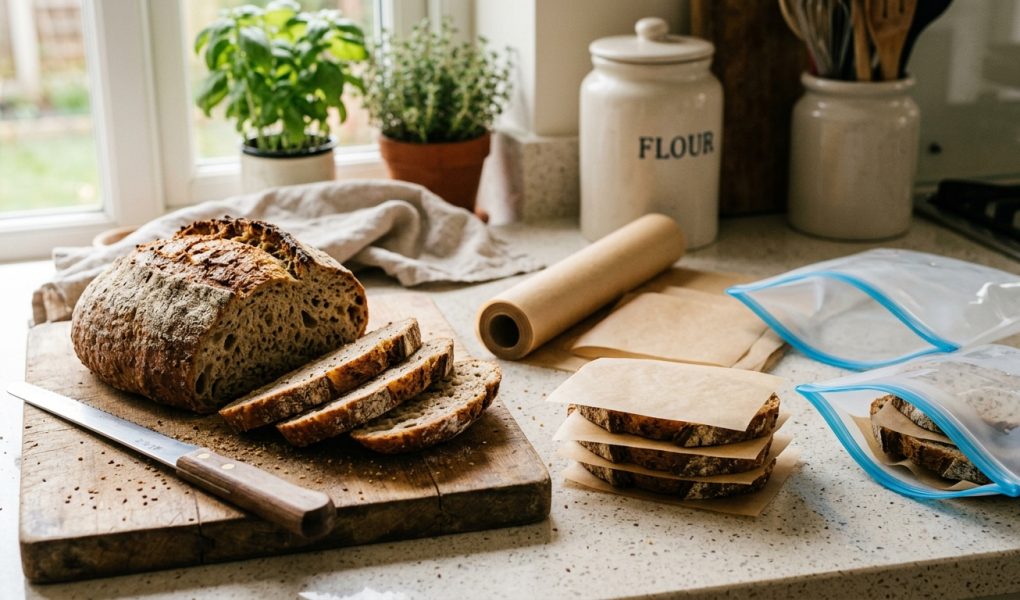
- Pre-Slice the Entire Loaf: Always slice bread before freezing. Gluten-free loaves freeze solid; attempting to saw through a frozen solid loaf destroys the delicate structure.
- Insert Parchment Separators: Place a small 2-inch square of non-stick baking parchment paper between every slice to prevent them from fusing into an immovable block.
- Double Seal: Pack the pre-sliced stack into a heavy-duty freezer zip-top bag. Squeeze out all residual air using a drinking straw before sealing tightly.
- Label with Freeze Date: Gluten-free bread maintains peak flavor for up to 3 to 6 months in a standard home deep freezer.
Master Defrosting & Toasting Guide
| Desired Serving Format | Best Thawing Technique | Time Required | Texture Result |
|---|---|---|---|
| Crisp Golden Toast | Pop straight into toaster on ‘Defrost’ / ‘Frozen’ setting | 90 to 120 seconds | Crispy exterior, soft hot center (Recommended) |
| Soft Cold Sandwich Bread | Countertop thaw inside sealed bag, or microwave for 10 sec | 15 minutes on counter | Pliable, soft, sliceable crumb |
| Whole Artisan Crusty Boule | Thaw at room temp for 2 hrs, then bake at 350°F (175°C) | 10 minutes in oven | Bakery-fresh crackly crust with steamy interior |
Freezing Gluten-Free Dough vs. Baked Bread
While fully baked gluten-free bread freezes exceptionally well, unbaked gluten-free yeast dough does not tolerate freezing because ice crystals rupture the fragile cell walls formed by xanthan gum. Always bake loaves completely before freezing.
Frequently Asked Questions
Can you freeze gluten-free sandwich bread with mayonnaise or fillings?
No. Condiments like mayo, lettuce, and tomatoes separate and become watery upon thawing. Always freeze plain bread slices and assemble sandwiches fresh.
Why does my frozen gluten-free bread break when toasted?
High moisture loss in the freezer causes brittleness. Ensure bread is stored in heavy-duty airtight freezer bags with all excess air expelled.
Can you refreeze thawed gluten-free bread?
Refreezing previously thawed bread causes severe moisture loss and crumbly texture. Only remove the exact number of slices you plan to consume immediately.
Freezer Life Comparison by Gluten-Free Bread Variety
| Gluten-Free Bread Type | Max Freezer Storage Time | Optimal Thaw / Reheat Method |
|---|---|---|
| Sandwich Bread Loaf (Sliced) | 4 to 6 months | Toaster defrost setting (90 sec) |
| Dinner Rolls & Burger Buns | 3 to 4 months | Wrap in damp paper towel, microwave 15 sec |
| Artisan Sourdough Boule | 4 to 6 months | Room temp thaw (2 hrs), 350°F oven for 8 min |
| Tortillas & Flatbreads | 6 months | Dry hot skillet for 30 sec per side |
Avoiding Condensation and Ice Crystals
When moist air is trapped in freezer bags, temperature fluctuations in auto-defrost freezers turn moisture into large ice crystals. To protect gluten-free bread structure, use a vacuum sealer or double zip-top bags with moisture-absorbent parchment paper sheets.
Summary Checklist for Freezing Gluten-Free Bakery Breads
| Step | Action Required | Why This Protects Texture |
|---|---|---|
| 1. Cool Completely | Wait 3 hours after baking before slicing | Prevents internal moisture condensation from freezing into frost |
| 2. Slice & Separate | Use parchment paper squares between slices | Enables single-slice removal without thawing entire loaf |
| 3. Double Airtight Seal | Zip-top freezer bag with straw air extraction | Prevents freezer burn and vapor loss |
Get our latest guides, news, and insights highlighted in your Google Search & AI Overviews.


