
✨ This article was AI edited. Editorial responsibility: SabriNasSinlessSecrets.com.
Baking a fresh loaf of artisan sourdough or gluten-free bread fills your home with irresistible warmth. However, unlike commercial store loaves that contain chemical preservatives, mono-glycerides, and calcium propionate, pure homemade bread begins losing its crisp crust and soft interior crumb within 24 to 48 hours. Understanding the food science of retrogradation and mastering proper storage containers ensures your homemade bread stays bakery-fresh for days.
Table of Contents
The Science of Staling: Why Bread Goes Stale
Staling is not merely bread drying out—it is a chemical process called starch retrogradation:
- Gelatinization During Baking: In the oven, wheat and gluten-free starches absorb water and gelatinize into a soft, flexible network.
- Recrystallization: As the loaf cools, amylose and amylopectin starch molecules gradually re-align into rigid crystalline structures, forcing water out and making the crumb firm and dry.
- Temperature Sensitivity: Starch retrogradation occurs 6 times faster at refrigerator temperatures (38°F–42°F / 3°C–5°C) than at room temperature. Never store fresh bread in the refrigerator!
Master Comparison of Bread Storage Methods
| Storage Container | Crust Condition | Crumb Softness | Ideal Bread Type & Duration |
|---|---|---|---|
| Linen / Cotton Bread Bag | Stays Crisp & Crackly | Soft for 2–3 days | Artisan sourdough and crusty country boules |
| Wooden / Bamboo Bread Box | Balanced Moisture | Soft for 3–4 days | Sandwich loaves, brioche, and sandwich rolls (Recommended) |
| Sealed Plastic Bag | Softens into chewy skin | Very soft (traps moisture) | Gluten-free sandwich breads & burger buns |
| Refrigerator | Leathery | Stales rapidly | NEVER RECOMMENDED (Accelerates staling 6x) |
| Deep Freezer (0°F / -18°C) | Preserved perfectly | Frozen in time | Sliced bread for up to 3 to 6 months |
The Sliced Freezer Method: The Ultimate Anti-Staling Strategy
If you cannot finish an entire homemade loaf within 3 days, freezing individual slices is the single most effective way to preserve peak oven freshness:
- Cool Completely: Let the freshly baked loaf rest on a wire rack for at least 2 to 3 hours until completely room temperature. Slicing warm bread causes moisture steam to escape, immediately drying the crumb.
- Slice Uniformly: Slice the entire loaf into 1/2-inch sandwich slices using a sharp serrated bread knife.
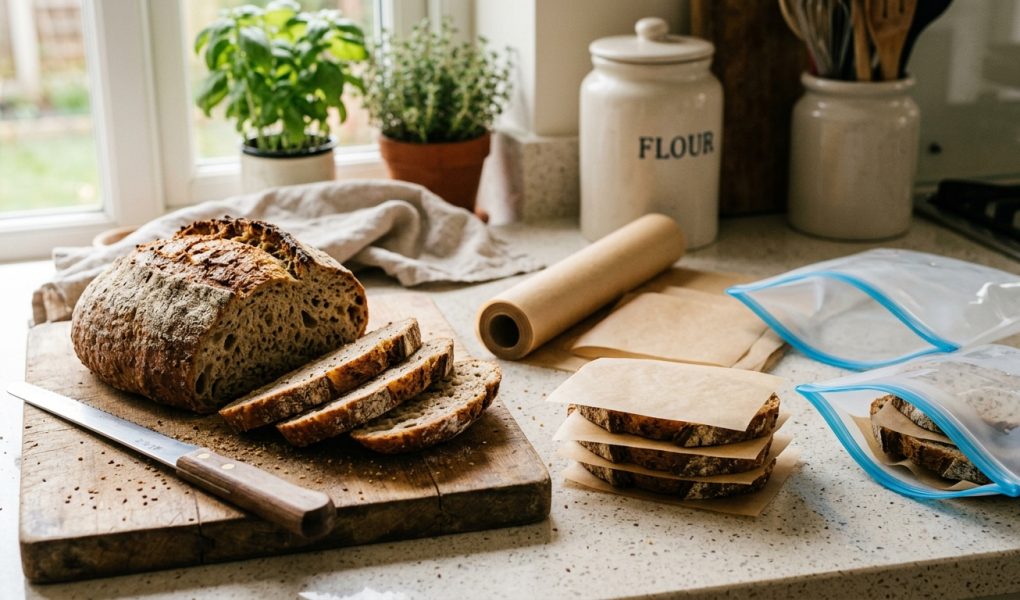
- Flash Freeze with Parchment: Place parchment paper squares between slices (or lay them flat on a baking sheet for 1 hour to freeze solid).
- Pack in Freezer Bags: Pack the frozen slices into a heavy-duty zip-top freezer bag, squeeze out excess air with a straw, and seal tightly.
- Instant Toasting: Take slices directly from the freezer and pop them into your toaster on the ‘Defrost’ setting. The intense heat instantly re-gelatinizes the starches, restoring fresh-out-of-the-oven flavor and texture in 90 seconds!
Reviving a Day-Old Stale Loaf
If your artisan loaf has become rock-hard after sitting on the counter:
- Run the uncut loaf briefly under a running kitchen faucet so the exterior crust is damp (do not soak the cut interior).
- Place directly onto the oven rack in a preheated oven at 350°F (175°C) for 7 to 10 minutes.
- The water turns to steam, penetrating the hard crust while heat breaks down retrograded starch crystals, restoring a crisp crust and cloud-soft interior.
Frequently Asked Questions
Why did my homemade bread grow mold after only 4 days?
Because homemade bread contains no anti-fungal chemical preservatives (like calcium propionate), natural airborne mold spores germinate quickly in warm, humid kitchens. Store bread in a cool, ventilated bread box.
Can I store bread with a cut side down on a wooden board?
Yes! Resting the cut face of an artisan loaf flat against a wooden cutting board shields the exposed crumb from dry air while allowing the thick outer crust to breathe.
Does gluten-free bread stale faster than wheat bread?
Yes. Gluten-free starches (rice and potato) lose moisture and retrograde twice as fast as wheat gluten. Always slice and freeze gluten-free loaves within 24 hours of baking.
Understanding Bread Crust Humidity Dynamics
| Bread Style | Primary Storage Goal | Optimal Strategy |
|---|---|---|
| Crispy Artisan Sourdough Boule | Prevent crust from softening into rubber | Linen bread bag or paper sack for 48 hours; then slice and freeze |
| Soft Enriched Sandwich Loaf (Brioche/Milk Bread) | Preserve soft pillowy crumb | Wooden bread box or sealed reusable bread bag |
| Gluten-Free Quick Loaf / Yeast Bread | Prevent rapid retrogradation staling | Slice, flash freeze with parchment, store in heavy-duty freezer bags |
Creative Uses for Stale Homemade Bread Crusts
Never discard hardened artisan heels or stale ends:
- Homemade Garlic Herb Croutons: Cube stale bread, toss with olive oil, garlic powder, and oregano; bake at 350°F for 12 minutes.
- Artisan Panko Breadcrumbs: Pulse dried stale bread in a food processor and freeze for crispy chicken tenders.
- Tuscan Panzanella Salad: Toss toasted stale bread chunks with ripe tomatoes, cucumbers, basil, and red wine vinaigrette.
Get our latest guides, news, and insights highlighted in your Google Search & AI Overviews.


