
✨ This article was AI edited. Editorial responsibility: SabriNasSinlessSecrets.com.
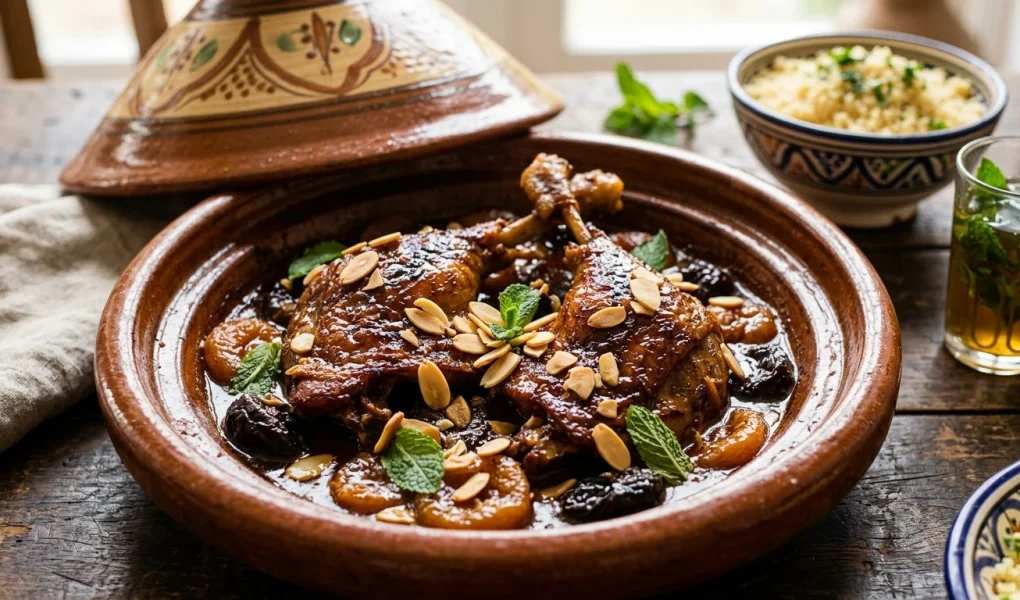
Few culinary combinations evoke the warm, aromatic allure of slow-simmered luxury quite like duck confit paired with rich dried fruits. When seeking an exquisite yet approachable centerpiece for a dinner party or celebratory family meal, an authentic slow cooker recipe for duck leg with apricots and prunes delivers extraordinary elegance with remarkably minimal kitchen effort. At Sabrina’s Sinless Secrets, we believe in celebrating decadent, nutrient-dense heritage dishes that naturally support wellness without resorting to processed additives or refined sugar glazes.
Duck leg quarters possess an abundance of intramuscular fat, deep red-meat savoriness, and rich connective collagen. In traditional French bistros, duck legs are submerged in quarts of rendered poultry fat for hours to achieve confit tenderness. By utilizing your countertop slow cooker and the natural tagine braising principles of North African cuisine, we can achieve identical melting tenderness while infusing the meat with the sweet-tart complexity of dried Mediterranean apricots, succulent prunes, Ceylon cinnamon, and toasted coriander.
Table of Contents
- Why Duck Legs Thrive in Slow Cooking Environments
- Essential Ingredients for the Apricot & Prune Duck Braise
- Step-by-Step Cooking Instructions
- Macronutrient Breakdown & Nutritional Analysis
- Ideal Low-Carb & Gluten-Free Serving Accompaniments
- Storage, Freezing, and Next-Day Meal Ideas
- Frequently Asked Questions About Cooking Duck Legs in a Slow Cooker
Why Duck Legs Thrive in Slow Cooking Environments
Unlike lean poultry like chicken or turkey breast, duck meat is biologically composed of dark, slow-twitch muscle fibers surrounded by a dense subcutaneous fat layer. High-heat roasting runs the risk of either incinerating the exterior skin before the interior gristle melts or drying out the meat before sufficient fat renders.
A slow cooker provides an airtight convection environment where the duck’s own natural lipids render slowly at sub-boiling temperatures (approximately 195°F to 205°F / 90°C to 96°C). As the fat liquefies, it acts as a self-basting braising medium. Concurrently, dried apricots (rich in malic acid) and prunes (rich in sorbitol and polyphenols) soften into the braising liquid, creating a velvety, unctuous sauce that perfectly balances the gaminess of the waterfowl.
| Culinary Attribute | Traditional Oven Confit | Slow Cooker Tagine Braise | Health & Practical Advantage |
|---|---|---|---|
| Active Prep Time | 45 minutes | 15 minutes | 66% reduction in hands-on kitchen labor |
| Added Cooking Fat | 4 to 6 cups rendered duck fat | 1 teaspoon olive oil (for initial sear) | Relies 100% on the duck’s own natural lipid rendering |
| Sauce Development | Separate reduction pan required | Autonomous reduction in the crock | Dried fruit pectin thickens sauce naturally without flour |
| Cleanliness & Splatter | High oven splatter, multiple pans | Self-contained inside ceramic crock | Minimal cleanup; zero grease aerosols in kitchen air |
| Nutritional Balance | Very heavy; fat-dominant | Balanced with fiber, iron, and potassium | High micronutrient density from stone fruits and spices |
Essential Ingredients for the Apricot & Prune Duck Braise
To capture the authentic balance of sweet, savory, and aromatic notes, gather these premium whole-food ingredients:
- 4 Pasture-Raised Duck Leg Quarters: (Approximately 2.5 to 3 lbs total weight). Look for plump legs with clean, intact skin.
- 1 cup Organic Dried Turkish or California Apricots: Halved. Dried apricots provide bright tartness and natural pectin.
- 1 cup Pitted Dried Agen Prunes: Halved. Prunes lend deep caramelized sweetness and rich molasses undertones.
- 1 large Yellow Onion: Thinly sliced from root to stem into half-moons.
- 4 cloves Fresh Garlic: Finely sliced or minced.
- 1 tbsp Fresh Ginger: Grated on a microplane for spicy aromatic brightness.
- 1 cup Rich Duck or Bone Broth: Organic low-sodium chicken bone broth also works beautifully.
- 1/4 cup Dry Red Wine or Unsweetened Pomegranate Juice: Introduces crucial tannins and acid to cut the rich duck fat.
- 1 Cinnamon Stick (Ceylon preferred): For warm, woody fragrance.
- 1 tsp Ground Cumin & 1 tsp Ground Coriander: Earthy aromatic anchors.
- 1/2 tsp Ground Turmeric & 1/4 tsp Ground Cardamom: Imparts golden color and herbal depth.
- 1.5 tsp Fine Sea Salt & 1 tsp Freshly Cracked Black Pepper: Season generously.
- 1/4 cup Sliced Almonds (Toasted) & Fresh Mint: For finishing crunch and vibrant herbal contrast.
Step-by-Step Cooking Instructions
Follow our signature five-step methodology to achieve crisp skin and fork-tender meat:
- Score and Sear the Skin (The Flavor Foundation): Using a sharp paring knife, lightly score the skin of each duck leg in a cross-hatch diamond pattern, taking care not to puncture the meat beneath. Season both sides with 1 teaspoon of sea salt and freshly cracked black pepper. Place the duck legs skin-side down in a cold dry stainless steel or cast-iron skillet over medium-low heat. As the pan warms, the subcutaneous fat will gently render out. Cook for 8 to 10 minutes until the skin is deep golden brown and crispy. Pour off the rendered liquid fat into a glass jar (reserve this liquid gold in your fridge for roasting potatoes later!). Transfer the seared duck legs to a plate.
- Sweat the Aromatics: In the same skillet using just 1 tablespoon of the remaining duck drippings, sauté the sliced onions, garlic, and grated ginger for 3 to 4 minutes until translucent. Stir in the ground cumin, coriander, turmeric, and cardamom, toasting the spices for 45 seconds until fragrant. Deglaze the skillet with the red wine or pomegranate juice, scraping up the browned fond from the bottom.
- Layer into the Slow Cooker: Transfer the spiced onion mixture into the bottom of a 4-to-6 quart slow cooker insert. Scatter the halved dried apricots and prunes evenly over the onion bed. Tuck the whole cinnamon stick into the center. Pour the bone broth around the perimeter.
- Nest the Duck Legs: Place the seared duck legs skin-side up on top of the fruit and onions. Keep the crispy skin above the liquid level to prevent it from becoming waterlogged. Secure the slow cooker lid tightly.
- Slow Simmer: Cook on LOW for 6 to 7 hours (or on HIGH for 3.5 to 4 hours). The meat is finished when it easily pulls away from the bone and the fruit has softened into a thick, glistening compote.
- Crisp & Garnish: Carefully lift the duck legs out. If you desire ultra-crisp crackling skin, place the legs under a hot oven broiler for 2 to 3 minutes. Skim excess surface fat from the fruit reduction in the slow cooker. Spoon the rich fruit compote onto wide serving platters, rest the duck legs on top, and shower with toasted sliced almonds and freshly torn mint leaves.
Macronutrient Breakdown & Nutritional Analysis
While duck is a rich protein, its fatty acid profile consists predominantly of healthy monounsaturated fats (similar to olive oil), specifically oleic acid. Furthermore, the combination of iron-rich duck meat and vitamin C from stone fruits enhances non-heme and heme iron bioavailability.
| Nutritional Parameter | Per Serving (1 Leg Quarter + 1/2 cup Compote) | % Daily Value |
|---|---|---|
| Calories | 440 kcal | 22% |
| Protein | 36 grams | 72% |
| Total Fat | 22 grams | 28% |
| Saturated Fat | 6 grams | 30% |
| Monounsaturated Fat | 12 grams | – |
| Carbohydrates | 24 grams | 9% |
| Dietary Fiber | 4.5 grams | 18% |
| Natural Sugars (From Fruit) | 16 grams | – |
| Potassium | 680 mg | 15% |
| Iron | 4.8 mg | 27% |
Ideal Low-Carb & Gluten-Free Serving Accompaniments
To maintain a clean-eating, sinless profile, pair this rich dish with nutrient-dense sides that absorb the spiced sauce without weighing down digestion:
- Herbed Cauliflower Couscous: Pulse fresh raw cauliflower florets in a food processor until they resemble fine couscous grains. Sauté in a touch of olive oil with lemon zest, chopped parsley, and toasted pine nuts for 3 minutes.
- Roasted Kabocha or Delicata Squash: The gentle nutty sweetness of winter squashes harmonizes with the spiced stone fruits.
- Braised Bitter Greens: Quick-wilted dandelion greens, Swiss chard, or curly kale dressed with fresh lemon juice provide a welcome bitter contrast to the sweet prunes.
- Saffron Quinoa Pilaf: For gluten-free diners who enjoy complex grains, fluffy white quinoa infused with a pinch of real saffron threads and sea salt provides a regal base.
Storage, Freezing, and Next-Day Meal Ideas
Like many slow-cooked dishes, duck legs with apricots and prunes taste even richer after 24 hours in the refrigerator as the spices continue to penetrate the meat fibers.
- Refrigeration: Store in an airtight container for up to 4 days. Any rendered fat will rise and solidify at the top; this fat cap acts as a natural protective seal. Simply lift off the solid fat layer before gently reheating.
- Freezer Storage: Shred the cooked meat off the bones and submerge in the fruit sauce in freezer-safe glass containers for up to 3 months.
- Gourmet Leftover Transformation: Shred leftover duck meat and toss with the cold fruit compote, baby arugula, goat cheese crumbles, and toasted pecans for a five-star Parisian bistro salad.
Frequently Asked Questions About Cooking Duck Legs in a Slow Cooker
Do I really need to sear the duck legs before slow cooking?
While not strictly mandatory for safety, searing duck skin before slow cooking renders out up to 70% of the heavy subcutaneous fat and creates deep savory Maillard compounds. Skipping this step can result in an overly greasy braising broth and pale, flaccid skin.
Can I substitute other dried fruits?
Yes! While apricots and prunes provide the traditional sweet-and-sour Moroccan tagine profile, you can substitute dried Mission figs, dried dark cherries, golden raisins (sultanas), or pitted Medjool dates with spectacular results.
Can I make this recipe with bone-in chicken thighs instead?
Absolutely. If duck leg quarters are difficult to source locally, large bone-in, skin-on chicken thighs make a delicious everyday alternative. Reduce the slow cooking time to 4 to 5 hours on Low or 2.5 to 3 hours on High.
How do I skim fat from the sauce without a fat separator?
Ladle the cooking sauce into a wide measuring cup and let it sit for 5 minutes; the clear golden fat will rise to the top where it can be easily skimmed with a wide soup spoon. Alternatively, chill the sauce in the freezer for 20 minutes to solidify the fat layer for effortless removal.
Get our latest guides, news, and insights highlighted in your Google Search & AI Overviews.


