
✨ This article was AI edited. Editorial responsibility: SabriNasSinlessSecrets.com.
Baking homemade gluten-free bread no longer requires trial-and-error chemistry experiments in your kitchen. Creating a balanced DIY gluten-free bread mix—or knowing how to optimize commercial box mixes—allows you to achieve lofty, golden-crusted loaves with an open, tender crumb and zero gummy density.
Table of Contents
- The Chemistry of an Ideal Gluten-Free Bread Mix
- Master Homemade DIY Gluten-Free Bread Mix Formula
- Comparison Table: Commercial vs. DIY Gluten-Free Bread Mixes
- Hydration, Proofing, and Baking Protocol
- Flavor Adaptations and Specialty Grains
- Shelf Life, Storage, and Freezing Best Practices
- Troubleshooting Common Gluten-Free Bread Mix Mistakes
- Frequently Asked Questions
The Chemistry of an Ideal Gluten-Free Bread Mix
Traditional wheat bread depends on gluten protein matrices to trap carbon dioxide released during yeast fermentation. To replicate this structure without gluten, a successful bread mix requires a mathematically balanced ratio of four key functional components:
- Structure & Protein Flours (30–40%): Sorghum flour, brown rice flour, buckwheat flour, or millet flour provide earthly flavor, fiber, and structural integrity.
- Starches for Gelatinization & Lightness (40–50%): Tapioca starch, arrowroot starch, and potato starch absorb hydration rapidly, creating a delicate, airy crumb upon baking.
- Hydrocolloid Binders (2–4%): Whole psyllium husk powder and xanthan gum act as the gluten substitute, providing tensile strength, gas retention, and elasticity.
- Nutrient & Fat Modifiers (5–10%): Almond flour, flaxseed meal, or milk powder enhance moisture retention and foster beautiful Maillard browning on the crust.
Master Homemade DIY Gluten-Free Bread Mix Formula
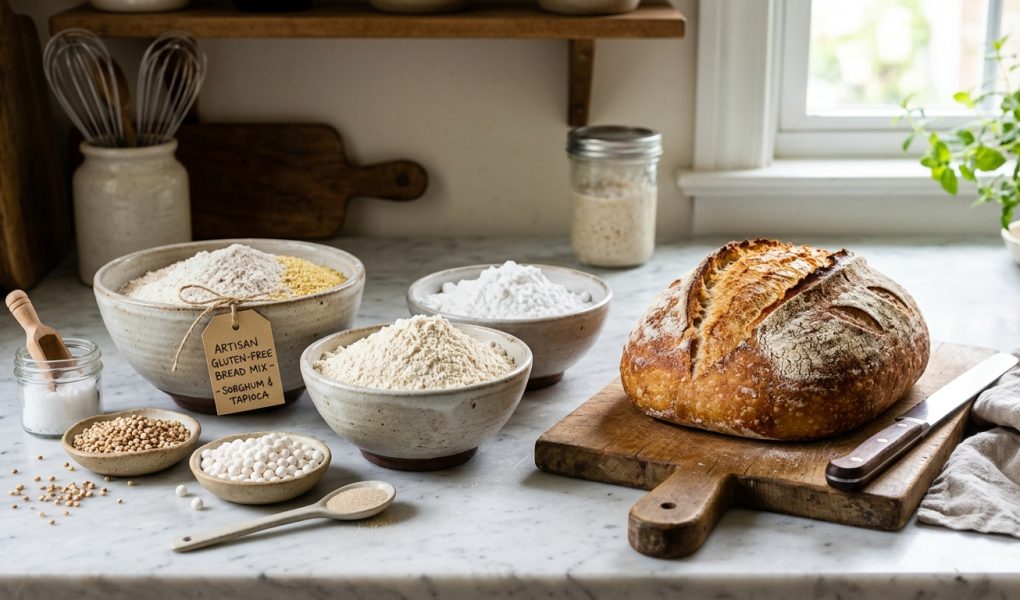
Keep a large airtight container of this universal bread blend ready in your pantry for artisan boules, sandwich loaves, focaccia, and dinner rolls:
- 250g Sorghum Flour: Imparts a mild, whole-wheat flavor profile without bitterness.
- 250g White or Brown Rice Flour (Superfine): Provides a neutral base; always choose superfine grind to avoid grittiness.
- 300g Tapioca Starch (Cassava Flour): Delivers chew, elasticity, and excellent crust blister.
- 150g Potato Starch (Not Potato Flour): Locks in crumb moisture and softens interior texture.
- 35g Whole Psyllium Husk Powder: High-fiber binder that forms a flexible hydrogel when mixed with warm water.
- 15g Xanthan Gum: Stabilizes gas bubbles during active yeast fermentation.
Comparison Table: Commercial vs. DIY Gluten-Free Bread Mixes
| Mix Metric | DIY Custom Bread Mix | Commercial Store-Bought Mix |
|---|---|---|
| Cost per Loaf | $2.00 – $2.75 | $6.50 – $9.00 |
| Ingredient Control | 100% custom (corn-free, soy-free, nut-free) | Often contains refined cornstarch and preservatives |
| Hydration Flexibility | Adjustable for high-hydration sourdough & focaccia | Strict recipe instructions required |
| Texture Consistency | Artisanal open crumb with chewy bite | Frequently cake-like or overly dense |
Hydration, Proofing, and Baking Protocol
Gluten-free dough behaves more like a thick batter or paste than elastic wheat dough. Follow these essential techniques for bakery-style results:
- Hydration Level: Target 85% to 95% hydration based on total flour weight. Gluten-free starches and psyllium absorb significantly more liquid than standard wheat flour.
- Single-Proof Rule: Gluten-free yeast dough does not require a second punch-down. Shape immediately into your loaf pan or banneton proofing basket, let rise once for 45–60 minutes until doubled, and bake immediately.
- Steam Injection Baking: Bake at 425°F (220°C) inside a preheated cast iron Dutch oven with the lid on for 35 minutes, then remove the lid for 20 minutes to develop a thick, golden crust.
- Cooling Rest Period: NEVER cut into a warm gluten-free loaf. Let it rest on a wire rack for at least 2 hours. Slicing too early causes steam to collapse the internal starches into a gummy center.
Flavor Adaptations and Specialty Grains
Customize your master blend for sweet or savory specialty baking:
- Artisan Sourdough Boule: Replace 100g of rice flour with teff flour and add 1 tablespoon of apple cider vinegar to replicate authentic sourdough tang.
- Rustic Seeded Sandwich Bread: Fold in 3 tablespoons of raw sunflower seeds, golden flaxseeds, and toasted pumpkin seeds after the initial hydration rest.
- Cinnamon Swirl Breakfast Bread: Add 2 tablespoons of organic coconut sugar to the dry mix and roll out with cinnamon and butter filling.
- Herbed Garlic Focaccia: Dimple dough in a rimmed half-sheet pan, drench with extra virgin olive oil, fresh rosemary sprigs, and flaky sea salt.
Shelf Life, Storage, and Freezing Best Practices
Proper preservation ensures your custom gluten-free bread mix and baked goods remain fresh for months:
- Dry Mix Pantry Life: Store in food-grade silicone-gasketed glass jars in a dark pantry for up to 6 months.
- Freezing Whole Grains: Whole-grain sorghum and rice flours contain delicate natural oils. Keep reserve bags in the freezer to prevent rancidity.
- Baked Loaf Freezing: Pre-slice your cooled loaf, insert parchment paper squares between slices, and seal in heavy-duty freezer bags for up to 4 months.
Troubleshooting Common Gluten-Free Bread Mix Mistakes
Keep this quick diagnostic guide handy whenever troubleshooting baking outcomes:
- Loaf Collapses in the Center: Over-proofing or excessive hydration. Reduce water by 2 tablespoons or shorten proofing time by 10 minutes.
- Crumbly Texture: Insufficient binder. Increase psyllium husk powder by 1 teaspoon or add 1 pasture-raised egg white.
- Gummy Bottom Crust: Inadequate bottom heat. Bake on the lowest oven rack or preheat a heavy baking steel.
- Pale, Dull Crust: Brush the dough surface with melted grass-fed butter or maple syrup wash prior to baking to enhance caramelization.
Frequently Asked Questions
Can I make gluten-free bread without xanthan gum?
Yes. Psyllium husk powder is an outstanding stand-alone natural binder that completely replaces xanthan gum. Use 4 tablespoons of psyllium husk powder per 500g of gluten-free flour blend.
How long does dry gluten-free bread mix stay fresh?
Stored in an airtight jar in a cool, dark pantry, dry flour blends stay fresh for up to 6 months. For extended shelf life up to 12 months, store the blend in the freezer to protect delicate whole-grain oils from oxidizing.
Can I use this mix in an automatic bread maker machine?
Yes. Select the specialized ‘Gluten-Free’ setting on your bread maker, which skips the secondary kneading cycle and proceeds straight to single-proofing and baking.
Get our latest guides, news, and insights highlighted in your Google Search & AI Overviews.


